
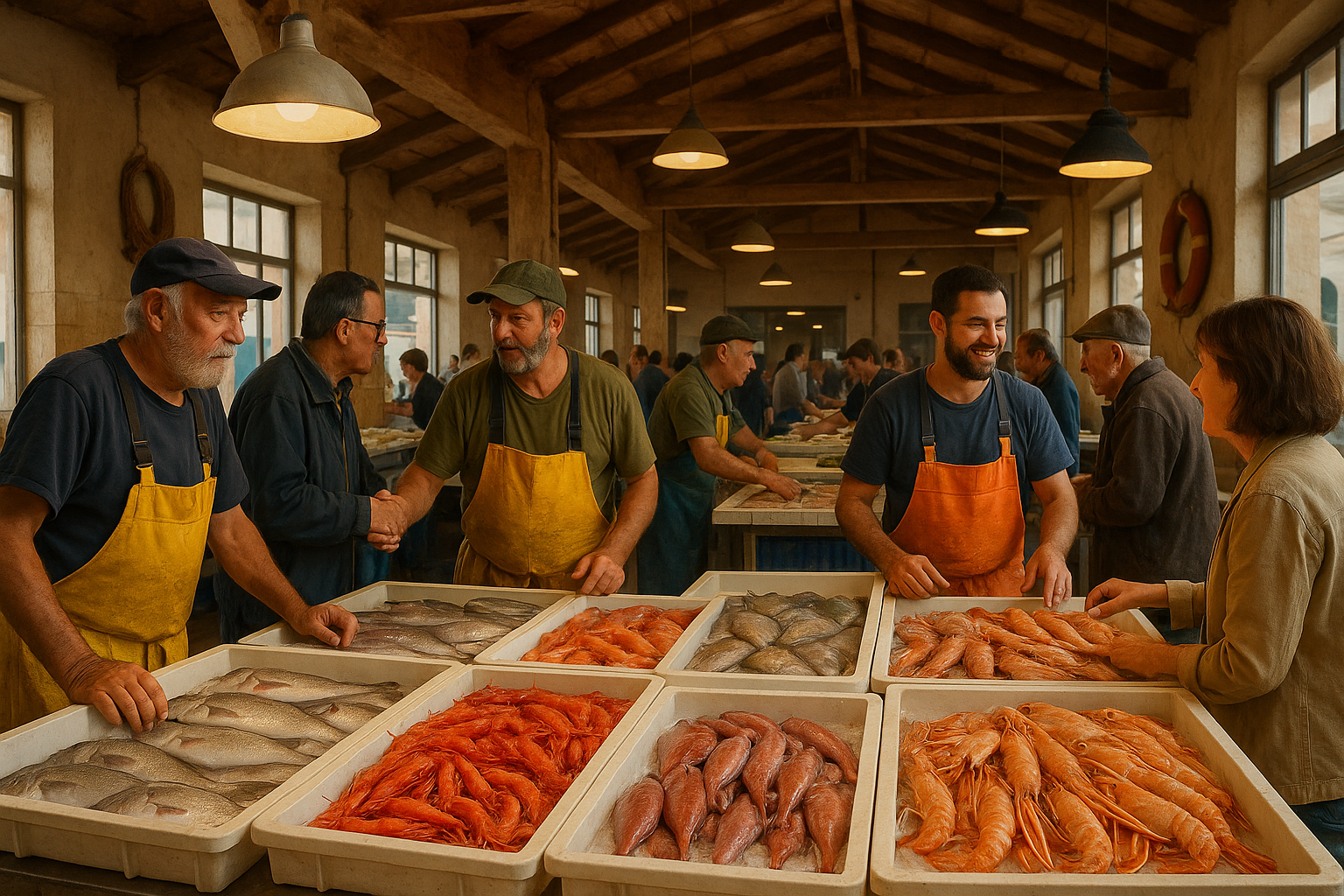
The Lonja de Conil is a must-visit for seafood lovers and those curious about artisanal fishing in Spain. Located in Cabo Roche's fishing port, this market has been the heart of Conil de la Frontera's fishing community since 1997. Here's what you need to know:
- Daily Auctions: Watch local chefs and fishmongers bid on freshly caught seafood like swordfish, red mullet, and octopus. Auctions are managed with a computerised system for fairness and efficiency.
- Sustainability Focus: The market promotes responsible fishing through OPP72, ensuring traceability and supporting local fishermen.
- Historical Significance: Conil's fishing heritage dates back to 1200 B.C., with ancient techniques like the almadraba still in use today.
- Unique Offerings: Try delicacies like red almadraba tuna and cones of fried fish, or purchase high-quality seafood directly from the source.
Practical Tips:
- Visit in the morning for the most vibrant experience.
- Located at Calle Puerta de Cádiz, 5, Cádiz, with easy access via public transport or taxi.
- Pair your visit with Conil's main market for a full culinary experience.
The Lonja de Conil blends tradition with modern practices, offering a glimpse into Spain’s rich fishing culture. Whether you're a seafood enthusiast or just curious, it's an experience worth having.
History of the Lonja de Conil

Fishing Heritage in Conil de la Frontera
Conil de la Frontera’s deep connection to the sea dates back to 1200 B.C., when the Phoenicians introduced the almadraba, a traditional method for catching tuna. This practice became an integral part of the area's identity, laying the foundation for a vibrant fishing culture.
By the 15th and 16th centuries, the almadraba and related tuna trap techniques were central to the town’s economy, contributing to its prosperity. However, as times changed, so did the methods. In 1982, traditional fishing tools like the Jábega were prohibited, prompting a shift toward more artisanal techniques. These changes not only preserved the fishing tradition but also inspired annual gastronomy festivals held every May, celebrating the enduring bond between Conil, its cuisine, and the sea.
The mid-1980s marked a new era for Conil’s fishing industry with the establishment of the fishing port at Cabo Roche. Today, this port supports around 65 fishing vessels, reflecting Conil’s ongoing dedication to artisanal fishing and the preservation of its rich marine biodiversity.
Role of OPP72 in Promoting Responsible Fishing
The Organización de Productores Pesqueros Artesanales Lonja de Conil (OPP72) plays a key role in blending traditional fishing practices with modern sustainability efforts. This organisation not only showcases Ibero-American artisanal fishing on international platforms but also collaborates with groups like WWF Spain and the Society for the Development of Coastal Communities. Together, they work to modernise fisheries and aquaculture across Andalusia. Through these efforts, OPP72 ensures that Conil’s maritime heritage remains vibrant and relevant.
In 2017, OPP72 launched the "Conil Fish Gastronomic Festival", a celebration aimed at promoting lesser-known fish species caught by the local fleet. With the support of the Association of Young Restaurateurs of Conil, the festival highlights both traditional and contemporary dishes crafted by local chefs. The event begins with a heartfelt tribute to those who have dedicated their lives to the sea.
Nicolás Fernández, President of the Iberoamerican Network, has highlighted the challenges posed by climate change, including species migration and disappearance. These pressing issues underscore the importance of OPP72’s mission to improve conditions for coastal communities while safeguarding the future of Conil’s long-standing fishing tradition.
What to Expect When Visiting the Lonja
Watch the Daily Fish Auctions
At the Lonja de Conil, you can witness the lively daily fish auctions where local chefs, restaurateurs, and fishmongers compete for the freshest catch of the day. These auctions are a fascinating mix of tradition and modernity. Since 1998, a computerised system has streamlined the process, ensuring fair prices while maintaining the authenticity of this age-old practice. From a specially designated viewing area, visitors can watch as species like rays, sole, cuttlefish, and dogfish are quickly classified, labelled, and auctioned off. It’s a dynamic spectacle that showcases the region’s rich maritime culture and the incredible variety of seafood available.
Types of Fresh Seafood Available
The Lonja de Conil is famed for its outstanding selection of fresh seafood, sourced daily from the region’s waters. Thanks to the area’s rich marine biodiversity and traditional fishing techniques, the market offers an impressive variety, including swordfish, red mullet, octopus, and cuttlefish. Around 80 fishing boats contribute to the daily haul, ensuring a constant supply of high-quality seafood. Among the highlights are local delicacies such as red almadraba tuna, fresh shrimp from the Bay of Cádiz, and grilled octopus. The almadraba tuna, in particular, is a standout, caught using an ancient and sustainable fishing method that has been preserved in the region.
Local Atmosphere and Market Culture
Located in the fishing port of Cabo Roche, the Lonja de Conil is more than just a marketplace - it’s a living reflection of the town’s deep connection to the sea. The market buzzes with activity in the early morning as fishing boats unload their overnight catches. Here, tradition meets technology, with modern auction systems complementing time-honoured practices. Fridays are particularly lively, offering visitors an intense and immersive experience that highlights the central role fishing plays in the local economy. The Lonja captures the spirit of Conil’s artisanal fishing heritage, providing an authentic and vibrant glimpse into this coastal community’s way of life.
Why Seafood Lovers Should Visit the Lonja de Conil
Focus on Quality and Responsible Fishing
The Lonja de Conil is a shining example of how responsible fishing practices can go hand in hand with top-tier quality. Here, the emphasis is on preserving marine resources through traditional, artisanal fishing techniques. This approach not only ensures sustainability but also delivers seafood that stands out for its freshness and flavour. At the heart of this initiative is the Organización de Productores Pesqueros Artesanales de la Lonja de Conil (OPP-72), which has revolutionised the local fishing industry. By introducing traceability systems, OPP-72 connects fishers directly with customers, guaranteeing that every purchase benefits the local fishing community.
This dedication to quality has brought tangible rewards for both the environment and the livelihoods of local fishermen. Thanks to OPP-72's traceability system, prices for species like rubberlip grunt have reached €12 per kilogram, while moray eel sells for €3 per kilogram. As Nicolàs Fernàndez, the manager of OPP-72, succinctly puts it:
"It's all about selling better, not fishing more".
The port of Cabo Roche is home to 65 fishing vessels, all exclusively engaged in artisanal fishing. This small-scale approach taps into the region's abundant marine biodiversity while adhering to sustainable principles. In fact, artisanal fisheries account for over 80% of Mediterranean fishing fleets, making them vital to the well-being of coastal communities. For seafood enthusiasts, this means access to ethically sourced, traceable products that are as fresh as they are flavourful. The Lonja de Conil's commitment to sustainable fishing is evident in every catch, making it a haven for those who value both quality and responsibility.
Market Specialties
The Lonja de Conil doesn't just focus on sustainability - it also celebrates the rich culinary heritage of the region through its seafood offerings. Among its most prized specialties is the red almadraba tuna, caught using an ancient and environmentally friendly method that has been passed down through generations in Conil. This traditional technique, internationally recognised as one of the most sustainable ways to fish for bluefin tuna, produces a catch of extraordinary quality and taste.
But the delights don't stop at tuna. The market boasts an impressive variety of seafood, including swordfish, red mullet, red snapper (bocinegro), conger eel, forkbeard, breca, feathered sea bream, octopus, and cuttlefish. Each of these options reflects the artisanal fishing methods and culinary traditions that define Conil de la Frontera.
For those seeking a true taste of Andalusian coastal cuisine, the Lonja is also famous for its cones of fried fish - a beloved local specialty that captures the essence of the region's gastronomic identity. And for the serious seafood aficionado, the Lonja de Conil offers the chance to purchase the same premium-quality fish that graces the menus of the area's most esteemed restaurants.
sbb-itb-16ae2e6
Practical Information for Visitors
Location and How to Get There
The Lonja de Conil is nestled in the Cabo Roche fishing port, providing a genuine glimpse into the region's maritime culture. Its exact address is Calle Puerta de Cádiz, 5, Cádiz, Andalucía. If you're keen to experience the bustling fish auctions and the lively market atmosphere, the port area is where you need to be.
Getting there is straightforward. Public transport is a budget-friendly option, with bus lines M-912, M-911, M-913, M-914, and LÍNEA 1 stopping near Carril De La Lonja. The closest bus stop, Casa de Postas, is just a 10-minute walk from the market. For detailed routes and real-time updates, apps like Moovit can be incredibly helpful.
Taxis and private cars are also convenient choices. If you're coming from the centre of Conil de la Frontera, a combination of bus and taxi will typically cost between €21 and €26. These options make it easy to plan your visit, especially during the bustling auction hours.
Opening Hours and Best Times to Visit
The Lonja de Conil operates in sync with the local fishing fleet, and its daily fish auctions are viewable from a designated visitor area.
Mornings are the best time to visit, as this is when the fishing boats return with their fresh catches. While the exact schedule can vary depending on weather conditions, fishing routines, and the season, arriving early ensures you'll catch the market at its most vibrant. The blend of traditional fishing practices and modern auction systems creates a fascinating experience. Plan your visit accordingly to take full advantage of the activity.
Tips for Your Visit
Make use of the visitor observation area to enjoy the auctions without disturbing the process. To enhance your day, consider pairing your trip with a visit to Conil's main market on Rosa de los Vientos Street, where you can sample local delicacies like the famous Conil artichokes.
🔴Noticia - Los pescadores de Cádiz, desesperados por la invasión de algas
Conclusion
The Lonja de Conil stands as a testament to the town's rich fishing heritage, operating since 1997 and embracing modern computerised auctions just a year later in 1998. What sets this market apart is its deep-rooted connection to Conil's fishing community and the lively daily auctions that celebrate the area's thriving marine life.
Blending tradition with modern practices, the Lonja not only preserves local customs but also creates a memorable experience for visitors. Whether you're a seafood enthusiast or someone intrigued by coastal traditions, the Lonja offers a unique window into Spain's vibrant fishing culture - where the energy of auctions meets age-old practices, leaving a lasting impression.
For more about Conil de la Frontera's sights and cultural highlights, visit What to Do in Conil.
FAQs
The Lonja de Conil truly comes to life when it’s brimming with energy, offering some of the freshest seafood around and a lively local vibe. If you’re planning a visit, the timing depends on the season. During the warmer months, it’s usually open on Saturday afternoons, while in winter, the best time to go is on Sunday mornings.
For those who prefer a quieter experience, spring and autumn are ideal. The weather is mild, and the crowds are more manageable. No matter when you visit, the Lonja is a must for seafood enthusiasts and a fantastic way to soak up the local culture.
The Lonja de Conil is central to promoting responsible fishing while safeguarding the livelihoods of the area's fishermen. Acting as a producer organization, it champions sustainable fishing practices that aim to protect marine ecosystems and ensure the future of local fisheries.
By emphasizing artisanal fishing methods, the Lonja preserves age-old techniques and nurtures a tight-knit community of small-scale fishers. These initiatives not only support the longevity of the fishing industry but also boost the local economy and provide residents and visitors with access to fresh, top-quality seafood.
At the Lonja de Conil, you'll find an incredible variety of freshly caught seafood, including swordfish, red mullet, red snapper, and conger eel. These fish are harvested using time-honored fishing techniques, preserving the quality and reflecting the rich maritime traditions of the region.
This lively fish market is a paradise for seafood enthusiasts. It’s not just about buying fish - it’s about immersing yourself in the energetic vibe of Conil de la Frontera’s fishing community and enjoying some of the freshest seafood you’ll ever taste.