
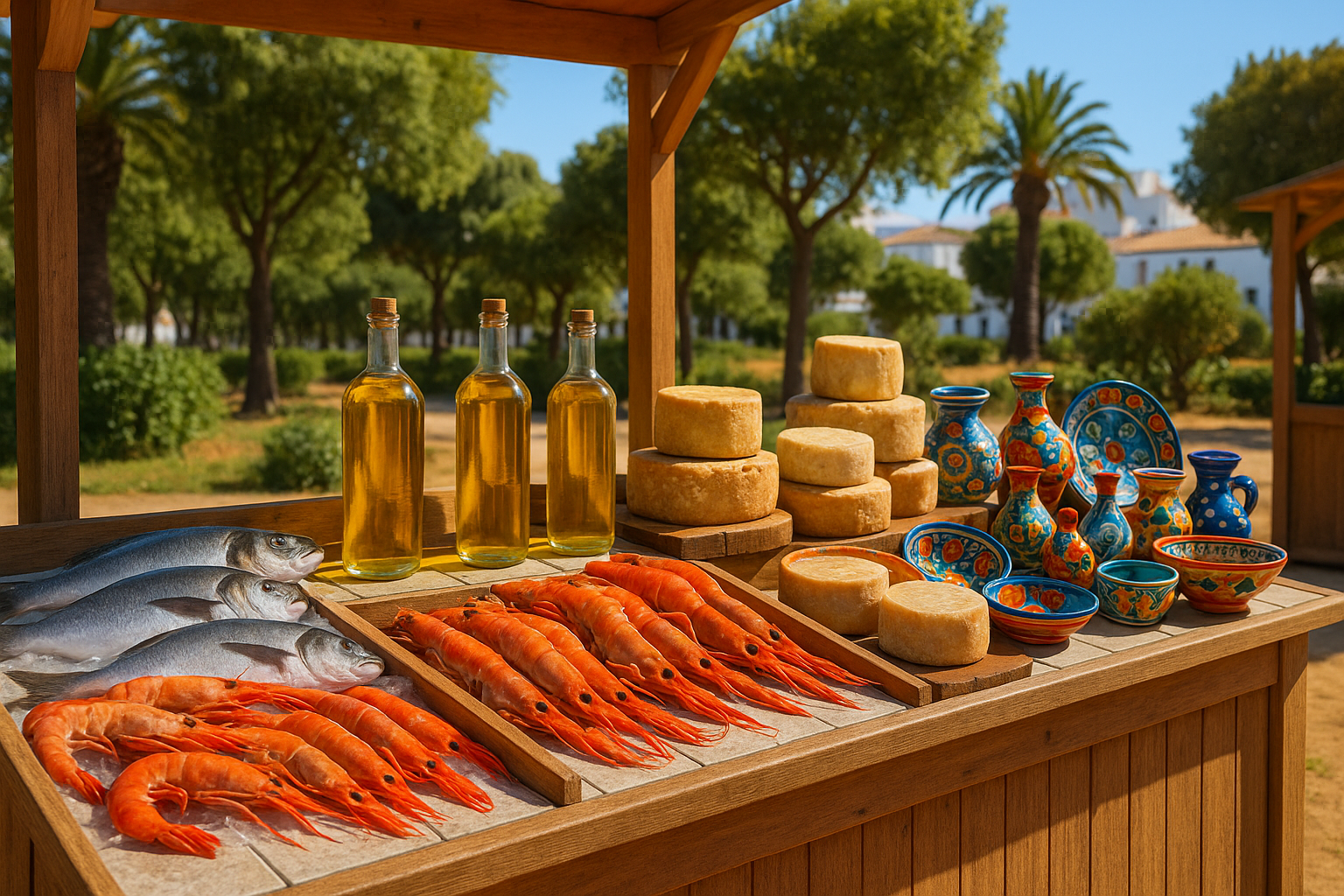
Conil de la Frontera, located on Spain's Costa de la Luz, is home to vibrant farmers' markets offering an array of local goods. These markets showcase everything from seafood and olive oil to handmade crafts and seasonal produce. Here's a quick look at what makes them special:
- Seafood: Fresh Atlantic catches, including bluefin tuna, using the historic almadraba method.
- Olive Oil: High-quality Andalusian varieties like Picual and Hojiblanca, sourced from local groves.
- Cheeses & Charcuterie: Goat and sheep cheeses, plus jamón ibérico from free-range pigs.
- Fruits & Vegetables: Organic and seasonal produce from nearby farms.
- Crafts: Handmade goods like ceramics, baskets, and jewelry.
- Sweets & Pickled Foods: Traditional confections and preserved vegetables.
- Wines & Sherry: Cádiz wines, including sherry from the "Sherry Triangle."
These markets offer more than shopping - they're a window into Conil's rich heritage. Whether you're after fresh ingredients, artisanal creations, or local flavors, there's something for everyone.
1. Fresh Seafood from the Atlantic
Product Origins and Sourcing
Conil's markets are a haven for seafood lovers, offering a daily bounty of fresh catches straight from the Atlantic. Local fishermen bring in sardines, sea bream, sole, prawns, and the prized bluefin tuna. What makes this even more special is the use of the traditional almadraba technique along the Cádiz coast. This ancient fishing method, practiced for generations, not only ensures a steady supply of tuna but also strikes a balance between commerce and conservation, respecting the delicate marine ecosystem.
Local Importance and History
Seafood is more than just food in Conil - it’s a cornerstone of its identity, steeped in centuries of history. The waters here have sustained communities for over 3,000 years, shaped by influences from the Phoenicians, Greeks, Romans, and Arabs. By the 16th century, the almadraba fisheries of Conil and Zahara were thriving, with catches surpassing an incredible 3.5 million bluefin tunas. Nearby Barbate also holds its own culinary tradition with mojama, a delicacy of air-dried tuna preserved in olive oil and sherry, a practice dating back to ancient times.
Quality and Freshness
The seafood's quality is as impressive as its history. Vendors in Conil adhere to strict standards to ensure every fish is as fresh as possible. Clear eyes, firm flesh, and a clean, salty aroma are all signs of top-quality fish, while any hint of ammonia is a red flag for spoilage. To back up these sensory checks, lab testing is also employed to guarantee both safety and freshness. This commitment to quality ensures that every bite is as exceptional as the region's rich maritime heritage.
2. Extra Virgin Olive Oil from Andalusia
Product Origins and Sourcing
Andalusia stands as the world's leading producer of olive oil, responsible for around 40% of global production across more than 1.5 million hectares of olive groves. Vendors in Conil source their oils from local groves, focusing on varieties such as Picual - which dominates 60% of the region's olive-growing area - as well as Hojiblanca, Arbequina, and Cornicabra. Spain exports over 1.2 million tonnes of olive oil each year, and Andalusia contributes nearly 80% of this output. This commitment to local sourcing and meticulous production techniques results in a product that reflects both the region's rich history and its dedication to quality.
Local Importance and History
The production of olive oil in Andalusia is deeply rooted in history, with traditions tracing back to Phoenician and Roman times. Centuries of Arabic influence further shaped this heritage - the Spanish word "aceite" originates from the Arabic "al-zait", meaning olive juice. Today, olive trees cover 45% of Andalusia's agricultural land, creating iconic landscapes that have inspired countless works of art and literature. Beyond its economic role, olive oil carries symbolic meanings of fertility, abundance, and wisdom throughout the Mediterranean. This cultural and historical significance is reflected in the high standards and reputation of Andalusian olive oil.
Quality and Freshness
Extra virgin olive oil from Andalusia is crafted with care, using olives from the first pressing and processing them within 12 hours to maintain a maximum acidity of 0.8%. The region’s twelve Denominación de Origen (PDO) certifications ensure both authenticity and exceptional flavour, guaranteeing the oil retains its natural characteristics and quality.
Production Methods and Environmental Practices
Harvesting in Andalusia combines traditional methods with modern innovations. Techniques like hand-picking and gentle "vareo" are common during the November–December harvest. Forward-thinking producers, such as Las Valdesas, employ strategies like early morning harvesting, immediate cold extraction, and nitrogen storage to preserve freshness and nutrients. In 2023, Marina Segura Gómez revolutionised her family’s olive business by introducing a mobile milling machine and transitioning their groves to organic farming. This shift not only elevated their oil to award-winning status but also allowed her father, Manuel, to launch a social enterprise empowering rural women. These practices ensure that the oil retains its natural aroma, flavour, and nutritional value from grove to bottle.
3. Local Cheeses and Charcuterie
Product Origins and Sourcing
Andalusia boasts a rich tradition of cheese and charcuterie, shaped by centuries of craftsmanship. Local producers rely on milk from native goat and sheep breeds, perfectly adapted to the region’s Mediterranean climate.
For those passionate about charcuterie, jamón ibérico is the crown jewel of Spanish cured meats. This delicacy comes exclusively from the black-skinned, black-footed Iberian pigs. Two Andalusian regions, Los Pedroches in Córdoba and Jabugo in Huelva, hold the prestigious denomination of origin status for their exceptional ham varieties.
Local Importance and History
The lively farmers' markets in Conil are more than just a place to shop - they’re a living connection to the region’s culinary roots, which trace back to Arab influences. Cheese-making and charcuterie have long been integral to Spain’s gastronomic heritage, cherished both locally and internationally. These enduring traditions are the foundation for the outstanding quality and sustainable production methods seen in Conil’s cheeses and cured meats.
Quality and Freshness
Conil’s farmers' markets uphold a reputation for excellence, with artisans focusing on natural ingredients and traditional techniques. Iberian ham, for instance, is renowned for its unparalleled quality, thanks to pigs that are raised free-range and fed on natural diets.
One standout example is Queso Payoyo, which gained international recognition when it was named "Spain's Best Cheese" by the Spanish Ministry of Agriculture in 2013. It further cemented its reputation with a bronze medal at the World Cheese Awards in 2014. This success underscores the dedication of Andalusian producers, who combine age-old methods with meticulous craftsmanship.
Production Methods and Environmental Practices
Much like the careful techniques used in Conil’s seafood and olive oil industries, cheese-making here reflects a strong commitment to sustainability. Many small-scale producers at Conil’s markets prioritise environmentally friendly practices, such as using milk from local herds with smaller carbon footprints and adopting organic farming methods.
The direct connection between farmers and visitors at these markets offers a unique opportunity to learn about the traditions and processes behind the products. Every wheel of cheese and slice of cured meat tells a story - of the land, the animals, and the people who bring them to life. This dedication to sustainable practices ensures that these artisanal delights remain rooted in their origins, creating a true pasture-to-plate experience.
4. Seasonal Fruits and Vegetables
Product Origins and Sourcing
Conil's farmers' markets are a treasure trove of fresh, seasonal produce, all sourced from nearby farms. At the heart of this vibrant scene is the Mercado de Abastos, where locals and visitors alike can connect directly with the farmers who grow their food.
Two local producers stand out for their dedication to quality. Ecocinelle Huerta Ecológica, run by Pedro José Muñoz Sánchez and Elisa Patiño Martínez, has been producing organic fruits and vegetables since 2019. Their farm offers a rich variety, including tomatoes, peppers, eggplants, strawberries, papayas, onions, and cruciferous vegetables, all certified organic by CAAE standards. Meanwhile, Frucoluz brings over four decades of expertise in the fruit and vegetable market, delivering consistently fresh and flavourful produce to both local and regional buyers. This direct-from-farm approach highlights Conil's long-standing farming traditions.
Local Importance and History
Seasonal eating is more than a trend in Conil - it’s a way of life deeply rooted in the region’s history. Generations of family-run farms have maintained traditional methods, supported by the area's Mediterranean climate and fertile soils that allow for year-round cultivation. March, for instance, is a month of abundance, as farms like Ecocinelle embrace the rhythm of the seasonal harvest.
Quality and Freshness
Seasonal fruits and vegetables aren’t just fresher - they’re packed with more nutrients and flavour. At Conil’s markets, the direct connection between growers and shoppers ensures top-notch quality. Farmers use techniques like high-quality seed-starting trays and succession planting to guarantee a steady supply of fresh produce. In fact, much of the produce arrives at the market on the same day it’s picked.
Production Methods and Environmental Practices
Local farmers in Conil are also committed to eco-friendly practices. Organic certifications, such as those held by Ecocinelle, guarantee that their crops are grown without pesticides or chemical fertilisers. To extend growing seasons, they use tools like protective tunnels and frost blankets, while carefully monitoring temperatures during colder months to keep crops healthy. Plus, buying seasonal, locally grown produce can reduce food-related carbon emissions by up to 7%. Shopping at Conil's markets not only brings fresh, delicious food to your table but also supports sustainable farming practices and strengthens the local economy for years to come.
5. Handmade Goods and Local Crafts
Product Origins and Sourcing
Conil's farmers' markets are a treasure trove of handmade crafts, each reflecting the rich heritage of Andalusia. Local artisans bring their creativity to life through a wide variety of products, including soaps, pottery, clothing, and jewelry, all deeply rooted in tradition.
Nearby Vejer also plays a vital role in producing these handcrafted goods. Take Juan María, for example - a ceramic artisan with over 30 years of experience. His work draws inspiration from Vejer’s iconic imagery, such as Cobijadas, cityscapes, panoramas, and windmills. Using traditional methods like bas-relief and lathe work, he creates pieces that are as much art as they are history.
Another example is Juana la cestera, a master basket weaver who uses natural materials like Juncus medullas, willow wickers, and palm leaves harvested from the local landscape. Her creations - baskets, hampers, hats, and bags - not only showcase her skill but also highlight a sustainable relationship with the environment. This seamless blend of tradition and ecological awareness is a hallmark of Conil’s artisan community.
Local Importance and History
The roots of the region’s crafts run deep, particularly in Vejer, where artisanal traditions have been preserved for generations. These aren’t just products - they’re living expressions of the area’s identity and history, offering visitors a tangible connection to Andalusia's cultural richness.
Juana la cestera’s work is a perfect example of this legacy. Her skillful weaving intertwines centuries-old techniques with modern functionality, keeping a vital tradition alive.
Today, many artisans are incorporating organic and sustainable practices into their work, reflecting a growing awareness of environmental stewardship. Conil’s street markets are filled with these handicrafts, which not only celebrate the region’s heritage but also captivate visitors with their authenticity and charm.
Quality and Craftsmanship
The craftsmanship on display at Conil’s markets is a testament to the dedication and artistry of its makers. Unlike mass-produced items, these handmade goods are celebrated for their attention to detail and unique character.
For instance, Juan María’s ceramics showcase decades of refined technique, while Juana’s baskets embody a mastery of weaving that dates back to ancient times. Each piece tells a story, blending skill and tradition in a way that resonates with buyers.
Production Methods and Environmental Practices
Sustainability is becoming a cornerstone of local craft production. Artisans in Conil are committed to using renewable and locally sourced materials, from clay to natural fibers, ensuring their methods honor both the environment and their heritage.
Globally, the cultural and creative industries have a significant economic footprint, contributing over 6.1% to the world’s GDP and supporting nearly 30 million jobs. Remarkably, this sector employs more young people aged 15–29 than any other and includes a workforce that is nearly 50% women, highlighting its inclusive nature.
When you buy handmade crafts at Conil’s markets, you’re doing more than purchasing a product - you’re supporting ethical commerce. Every euro spent goes directly to the artisans, ensuring fair compensation and helping to preserve traditional skills that might otherwise disappear. Much like Conil’s renowned seafood and produce, these crafts are an integral part of the region’s identity. They connect you to its history, sustain local economies, and keep the spirit of community alive.
sbb-itb-16ae2e6
6. Sweets, Nuts, and Pickled Foods
Product Origins and Sourcing
Beyond Conil's famous seafood and fresh produce, its markets offer a delightful array of sweets, nuts, and pickled foods that pay homage to Andalusian traditions. These include homemade preserves, artisanal confections, and carefully crafted pickled vegetables, all reflecting the region's culinary heritage.
The sweet treats are deeply rooted in Spain's confectionery history, with many recipes influenced by Arabic culture. Ingredients like almonds, honey, and rice, introduced during the Muslim rule, remain central to these creations. Many recipes also carry the legacy of monastic cooking, passed down through generations.
Nuts, dried fruits, and gourmet nut butters are sourced from local orchards and farms across Cádiz, showcasing the authentic flavours of Andalusian agriculture. Meanwhile, pickled foods - from classic vegetable pickles to creative seasonal blends - add a zesty twist to Conil’s vibrant food scene.
Local Importance and History
These preserved and sweetened specialties are more than just food; they are a vital part of Conil’s identity. While the town is widely known for its seafood, its culinary story is also shaped by enduring Andalusian traditions.
Local festivals often feature beloved sweets like rosquetes (doughnuts) and tortas de Navidad (Christmas cakes), reinforcing their cultural significance. Additionally, traditional preservation techniques, developed to suit the Mediterranean climate, continue to define the unique taste and texture of these foods. They remain comforting staples in households across the region.
Quality and Freshness
Producers in Conil prioritize quality by sticking to natural ingredients and time-honored methods, steering clear of artificial additives. This commitment ensures that every product is as fresh and authentic as possible.
Production Methods and Environmental Practices
Sustainability and craftsmanship are at the heart of these products. Many sweet makers prepare their goods in small batches, using only natural ingredients. For nuts, minimal processing methods like stone-grinding help retain their natural oils and flavours. Pickling relies on locally produced vinegars and careful fermentation techniques, resulting in tangy, flavourful creations.
7. Local Wines and Sherry from Cádiz
Product Origins and Sourcing
Cádiz is home to some of Spain's most cherished wines and sherries, deeply rooted in centuries-old traditions. Sherry, a fortified wine, is exclusively crafted from white grapes grown in the renowned "Sherry Triangle", which includes Jerez de la Frontera, Sanlúcar de Barrameda, and El Puerto de Santa María. This region's Palomino grapes, which make up 90% of production, flourish in the unique albariza soil. This chalky, white soil, rich in calcium carbonate, reflects sunlight and retains moisture, providing ideal conditions for grape cultivation under an arid climate with over 300 sunny days a year.
The sherry varieties range widely, from the dry Finos and Manzanillas to the sweet dessert wines made with Pedro Ximénez or Moscatel grapes. Manzanilla, in particular, stands out for its coastal microclimate influences in Sanlúcar de Barrameda, lending it delicate salt and floral notes. This combination of tradition, soil, and climate ensures Cádiz wines and sherries are truly special.
Local Importance and History
The history of sherry is as rich as its flavor, tracing back to the Phoenicians around 1100 BCE. It even earned mentions from the Greek geographer Strabo in the 1st century BC. Over time, sherry gained international fame, with Magellan including it on his voyage and Shakespeare celebrating it in his works. By the 1840s, sherry accounted for 20% of Spain's export value, and in 1933, the Jerez denominación de origen became Spain's first officially recognized wine designation, ensuring its protected status.
Quality and Freshness
The quality of Cádiz wines is a result of centuries of expertise paired with exceptional growing conditions. Sherry vineyards typically plant between 3,600 and 4,200 vines per hectare, striking a balance that maximizes grape quality. Unlike port wine, which is fortified during fermentation, sherry is fortified afterward. This process, combined with biological aging under a natural yeast layer called flor, creates dry wines with complex, layered flavors.
Production Methods and Environmental Practices
Sherry production in Cádiz blends tradition with a growing focus on sustainability. A hallmark of its production is the solera system, a unique aging and blending method that mixes wines from different vintages to ensure consistent quality and depth. Some solera systems, in use for over 100 years, contribute to sherries with remarkable complexity.
The region’s albariza soil plays a vital role in sustainable viticulture. Its ability to retain moisture reduces the need for excessive irrigation during the dry months, making it an effective natural solution. Additionally, many wineries are embracing environmentally friendly practices. Around 27% of Spanish wine is now organic, with producers turning to crop rotation, natural fertilisers, and biological pest control.
One standout example is Bodegas Lustau, which earned the "Wineries for Climate Protection" certification in October 2021. This recognition highlights efforts to cut emissions, improve water efficiency, reduce waste, and adopt energy-saving measures. Eco-friendly packaging, such as lightweight bottles and recycled materials, is also becoming more common, further reducing environmental impact.
Market Comparison Table
Conil is home to three distinct market experiences, each offering its own slice of the town's culinary and artisanal traditions. Whether you're after fresh produce, unique bargains, or handmade crafts, this guide will help you decide which market suits your interests and schedule.
| Market | Product Variety | Atmosphere | Best Visiting Times | Special Features |
|---|---|---|---|---|
| Mercado de Abastos | Fresh seafood (like tuna, sea bream, and cuttlefish), seasonal fruits and vegetables (such as tomatoes, melons, and peppers), farm-fresh meats, traditional sausages like butifarra, and food stalls serving local dishes | A bustling, traditional Andalusian market where locals gather in the mornings | Early mornings (8:00–10:00) for the freshest selection; weekdays are quieter than weekends | Perfect for stocking up on fresh, locally sourced foods at reasonable prices |
| Weekly "Piojito" Market | Second-hand goods, vintage items, clothing, household essentials, and flea market treasures | A casual and eclectic vibe, offering a more laid-back shopping experience | Arrive early to avoid crowds and snag the best deals | Great for finding unique bargains and hidden gems |
| Seasonal Craft Fairs | Handmade crafts, artisan jewellery, paintings, souvenirs, and summer-themed accessories | A creative and artistic atmosphere with a focus on local craftsmanship | Typically held on summer evenings along the seafront promenade; weekday afternoons are less crowded | Set against the scenic backdrop of the seafront, showcasing Conil's artisan heritage during the summer months |
The Mercado de Abastos is the beating heart of Conil's food scene, offering a true taste of daily life through its vibrant stalls and fresh products. On the other hand, the Seasonal Craft Fairs bring a splash of artistry to the seafront, featuring handmade goods that reflect the town's rich creative traditions. If you're looking for bargains or vintage finds, the Weekly "Piojito" Market is your go-to spot.
For the best experience, visit early in the morning on weekdays. This ensures a quieter atmosphere and access to the freshest items, as popular products tend to sell out quickly, and weekends can draw larger crowds.
Conclusion
Conil's farmers' markets are a true celebration of Andalusian culinary heritage, brimming with the finest local products. Whether it’s the bustling Mercado de Abastos or the colourful seasonal craft fairs, these markets offer a special chance to savour the flavours and traditions of Conil de la Frontera.
When you shop here, you’re not just picking up naturally ripened fruits and vegetables; you’re also directly supporting local farmers and the wider community.
Visiting these markets is more than just shopping - it’s an experience. Arrive early, bring cash, and don’t hesitate to chat with the vendors. Their recommendations and cooking tips can introduce you to must-try dishes and regional treats you won’t find anywhere else.
From fresh Atlantic seafood and high-quality olive oil to handmade crafts, Conil’s markets are where quality meets authenticity. They perfectly capture the charm and essence of Cádiz, making them a must-see for anyone exploring the area.
For more ideas on what to see and do in Conil, from its stunning beaches to its top-notch restaurants, check out What to Do in Conil.
FAQs
The almadraba is an ancient fishing method still practiced in Conil and the Cádiz region, specifically designed to catch bluefin tuna during their yearly migration. With origins tracing back more than 3,000 years, this technique uses a sophisticated maze of nets to guide the tuna while ensuring minimal impact on the surrounding marine environment.
This tradition holds immense importance, not just for its eco-conscious approach but also for its strong ties to local history. It plays a key role in preserving regional heritage, promoting responsible fishing, and delivering some of the highest-quality tuna, celebrated worldwide for its exceptional taste.
Andalusian Olive Oil: A Symbol of Quality
Andalusian olive oil stands out for its exceptional quality, a result of precise and time-honored production methods. One key practice is harvesting the olives within just 12 hours of picking to lock in their freshness. The oil is then extracted using the first cold pressing method, which ensures it remains pure and unaltered.
Many Andalusian olive oils also come with certifications like the Protected Designation of Origin (PDO). This label not only verifies their origin but also confirms they meet rigorous quality standards. Combined with the region's perfect climate and centuries of tradition, Andalusian olive oil has become a hallmark of excellence in southern Spain.
Handmade crafts from Conil are a beautiful expression of the area's rich history and traditions. Crafted using time-honored techniques and materials sourced from the region, these items reflect the essence of Conil's cultural roots. Many of these crafts are inspired by the town's deep ties to fishing, agriculture, and the lasting influence of Moorish culture, which have left their mark over the centuries.
Among the most sought-after creations are ceramics, leather goods, and artisanal jewellery. Each piece is made with incredible care and precision, offering not just a unique keepsake but also a meaningful connection to Conil's vibrant heritage and identity.